

Key Takeaways
-
Your gut and vaginal microbiomes play a key role in fertility, working together to support hormone balance and reproductive health.
-
Strains like Lactobacillus crispatus, L. rhamnosus GR-1, and Bifidobacterium longum are the most researched for supporting conception.
-
Perelel’s doctor-formulated supplements make it easy to build a daily routine that supports your whole body before, during, and after pregnancy.
When you think about fertility, your mind probably goes straight to hormones, ovulation, and egg quality. But here’s the thing: your microbiome also plays a major role. The trillions of bacteria in your gut and vaginal tract quietly influence everything from hormone balance to how your body prepares for conception.
At Perelel , we believe fertility starts with the whole body. Supporting your digestion, immune health, and vaginal ecosystem helps create the environment your body needs to thrive. But with so many probiotic options out there, it can be hard to tell what actually supports fertility and what’s just clever marketing.
Read on to learn which probiotic strains are backed by science and how to fit them into your routine to help your body feel ready to conceive.
1. Lactobacillus crispatus
Think of Lactobacillus crispatus as the gatekeeper of your vaginal microbiome. It’s one of the most dominant and desirable strains found in healthy vaginal environments and plays a key role in keeping everything balanced.
This strain helps maintain a naturally low pH, which discourages the growth of unwanted bacteria. Some research has also linked L. crispatus dominance to higher implantation and pregnancy success rates in fertility treatments.
Because it’s so sensitive, L. crispatus can be disrupted by common things like antibiotics, stress, or hormonal shifts. That’s why maintaining consistent probiotic support can help preserve its balance.
2. Lactobacillus rhamnosus (GR-1)
Lactobacillus rhamnosus GR-1 is one of the most researched strains for women’s health , particularly for the vaginal and urinary systems. It helps restore healthy flora after imbalance and supports the natural defense mechanisms of the vaginal tract.
Research suggests that keeping the vaginal microbiome stable with strains like L. rhamnosus may indirectly support conception by promoting an environment where healthy implantation is more likely. This strain is often paired with Lactobacillus reuteri RC-14, a companion strain that enhances its ability to maintain balance.
3. Bifidobacterium longum
Your gut and reproductive health are more connected than you might think. Bifidobacterium longum is a key player in maintaining a balanced gut microbiome , which can influence everything from how your body processes nutrients to how it metabolizes hormones.
A healthy gut supports healthy estrogen levels and nutrient absorption, two major factors in preparing the body for conception. B. longum also helps maintain digestive comfort and overall microbial balance, which can have a ripple effect across your entire system, including your vaginal health.
While it isn’t a “fertility strain” on its own, B. longum complements vaginal strains like Lactobacillus crispatus and Lactobacillus rhamnosus by promoting whole-body harmony. When your gut and vaginal microbiomes are in sync, your body is better supported for every stage of the fertility journey.
How To Read a Probiotic Label
You now know which strains matter most, but even the best probiotic isn’t helpful if you can’t tell what’s actually inside the bottle. Learning how to read a probiotic label is key to choosing one that truly supports your fertility goals.
Strain Specificity
Start with strain specificity. A good label lists the full name of each probiotic, not just the species. For example, Lactobacillus rhamnosus GR-1 tells you exactly which strain has been studied for vaginal health. A label that only says Lactobacillus rhamnosus or “proprietary blend” leaves you guessing.
CFU Count
Next, check the CFU count, which is the number of live bacteria per serving . For everyday support, look for around 10 billion CFU, which is the clinically studied dose for gut and vaginal balance. More isn’t always better. What matters is the right strain in the right amount.
Safety Testing
You’ll also want to see quality and safety testing clearly listed. Look for brands that are doctor-formulated, third-party tested, and made in FDA-registered facilities. These details tell you the product is held to high standards and is safe to use while trying to conceive or during pregnancy.
Clarity
And if the label still feels like alphabet soup? Stick with brands that clearly explain their ingredient choices and are transparent about formulation, like Perelel , where every product is developed by leading OB/GYNs with your reproductive health in mind.
Other Strains Being Studied (Emerging Evidence)
Research on the microbiome and fertility is growing quickly, and there are additional strains being studied for how they may support vaginal balance, inflammation, and overall reproductive health. The important caveat is that many studies are small, outcomes vary, and none of these should be framed as fertility treatments.
Consider these “watch list” strains that show up in women’s health research.
-
Lactobacillus reuteri (including RC-14): Often studied alongside L. rhamnosus for supporting vaginal flora and helping maintain balance after disruption. Research is promising for vaginal microbiome support, but results can vary based on population and protocol.
-
Lactobacillus gasseri: Commonly found in healthy vaginal environments and studied for its potential role in supporting a balanced vaginal microbiome. Some studies suggest it may help maintain a favorable vaginal ecosystem, but evidence is still emerging.
-
Lactobacillus jensenii: Another Lactobacillus species associated with vaginal health and low vaginal pH. It’s often discussed in the context of Lactobacillus dominance, though fertility-specific conclusions are still limited.
-
Lactobacillus plantarum: Typically researched more in the gut, including immune and inflammation pathways that may indirectly relate to reproductive health. The fertility connection is still an area of exploration rather than a firm conclusion.
-
Bifidobacterium breve: Studied for gut support, including digestive comfort and immune modulation. Like other Bifidobacterium strains, it may play a supportive role in whole-body balance, but pregnancy and fertility endpoints are not consistently established.
-
Bifidobacterium lactis: Often included in gut-focused formulas and researched for digestive and immune support. It may complement a broader microbiome approach, but it’s not a strain you’d point to as fertility-specific on its own.
Which Probiotic Is Best for Fertility?
There are plenty of probiotics out there promising better digestion, skin, or immunity, but when it comes to fertility, you need something more intentional. That's why Daily Probiotic is a best-in-class probiotic, meticulously informed by the latest women's health research.
It was designed by leading OB/GYNs and fertility experts to support your body where it matters most: your gut, your vaginal microbiome, and your immune health. Each daily dose delivers 10 billion CFU of targeted, research-backed strains that help maintain microbial balance and overall wellness.
What makes it special is how seamlessly it fits into your existing routine. You can take it before, during, or after pregnancy, and it pairs perfectly with any of our daily Perelel Packs for a complete, doctor-formulated supplement system. No guessing, no complicated stacks—just clean, effective support that evolves with you through every stage of your journey.
Who Might Benefit (TTC vs. IVF and Common Scenarios)
Probiotics can be a helpful part of a fertility routine, but the “why” can look a little different depending on your path.
In general, the goal is to support microbial balance in the gut and vaginal microbiomes, which can influence inflammation, immune signaling, and overall reproductive health. Consistency matters here, and most people think in terms of weeks to months, not overnight changes.
TTC (Trying To Conceive)
If you’re trying to conceive, probiotics are typically used as general microbiome support. Think of it as helping maintain a stable foundation while your body does the monthly work of preparing for implantation. It’s not a guarantee, but it can be a simple daily habit that supports overall balance.
ART including IVF
If you’re doing IVF or another assisted reproductive technology, the conversation often gets more specific. Emerging research continues to explore how the vaginal microbiome, including Lactobacillus dominance, may relate to implantation and pregnancy outcomes.
This is a good space for clinician coordination, especially if you’re using vaginal medications or have a treatment protocol that your care team wants to keep consistent.
PCOS or Metabolic Inflammation
For PCOS, probiotics are often discussed through a gut-health and inflammation lens. Supporting the gut microbiome may complement a broader plan that includes nutrition, movement, stress support, and any medications your clinician recommends. The goal is whole-body support, not a quick fix.
Recurrent BV or Yeast History
If you have a history of BV or yeast infections, probiotics may be used to support a vaginal environment where Lactobacillus strains are more dominant. Since recurrent symptoms can have multiple causes, it’s worth speaking with your OB/GYN to confirm what’s going on and what type of support makes the most sense.
Probiotics are an adjunct, not a replacement for medical evaluation or treatment, especially if symptoms are persistent or recurrent.
Frequently Asked Questions
Do I need to take probiotics forever?
Not necessarily. Think of probiotics as ongoing support rather than a lifetime prescription. You can take them consistently during your preconception journey, throughout pregnancy, and into postpartum to help maintain balance as your body changes. Once your system feels stable, your clinician can help you decide whether to keep them in your daily routine long-term.
Are there any strains to avoid?
It’s less about avoiding specific strains and more about choosing ones that actually belong in the gut or vaginal microbiome. Skip vague “proprietary blends” that don’t name strains or use bacteria not backed by research in women’s health. Stick to targeted, clinically studied options that are proven to support balance safely before, during, and after pregnancy.
Do I need to talk to my doctor first?
Yes, it’s always smart to loop in your doctor or OB/GYN, especially if you’re trying to conceive, pregnant, or taking other medications. They can help you confirm which supplements make sense for your individual health goals.
The good news: Perelel’s Daily Probiotic was formulated by OB/GYNs and fertility specialists, so you can bring it to your next appointment knowing it’s designed with your reproductive health in mind.
Do probiotics help you get pregnant?
Probiotics can support gut and vaginal microbiome balance, which may play a role in reproductive health, inflammation, and immune signaling. That said, research does not support probiotics as a standalone solution for getting pregnant, and results vary depending on the person and the specific strains used.
A probiotic is best viewed as supportive care that fits into a broader fertility plan. If you’re actively trying to conceive, your clinician can help you decide what’s appropriate for your body and goals.
How long should I take probiotics before trying to conceive?
Most microbiome-focused routines take time, so it’s reasonable to think in terms of weeks to a few months of consistent use rather than immediate effects. The right timeline can depend on why you’re using a probiotic, whether you have symptoms, and what other changes you’re making.
If you’re preparing for pregnancy, it can help to discuss your supplement routine with your OB/GYN, especially if you’re also taking a prenatal, iron, or other targeted nutrients.
Are probiotics safe during pregnancy?
Many probiotics are considered well-tolerated for healthy adults, and they’re commonly used during pregnancy. Still, “safe” depends on the specific product, your health history, and whether you’re immunocompromised or managing recurrent infections.
It’s smart to choose a strain-specific probiotic from a brand that prioritizes quality and testing, and to review it with your healthcare provider. Your OB/GYN can help confirm what makes sense during pregnancy and postpartum.
Best probiotic for TTC vs IVF: Are they different?
They can be. For TTC, probiotics are often used for general gut and vaginal microbiome support and routine consistency. For IVF or other ART cycles, conversations may be more specific because emerging research is exploring how vaginal microbiome patterns, including Lactobacillus dominance, may relate to implantation.
If you’re undergoing IVF, it’s especially important to coordinate with your fertility team so your supplement routine fits your protocol and doesn’t conflict with medications or timing.
Should I take an oral probiotic or a vaginal probiotic?
Oral probiotics are commonly used for gut support and may indirectly influence vaginal health through immune and microbial pathways. Vaginal probiotics are sometimes used for localized support, especially in recurrent imbalance scenarios, but they’re not right for everyone and are best discussed with a clinician.
The best choice depends on your history, symptoms, and goals. If you’ve had recurrent BV or yeast infections, your OB/GYN can help guide whether oral, vaginal, or a combined approach makes sense.
Can probiotics help if I have BV or yeast infections?
Probiotics may support a vaginal environment where Lactobacillus strains are more dominant, which is often associated with vaginal balance. However, probiotics aren’t a substitute for diagnosis or treatment.
If you have symptoms or recurrent BV or yeast infections, it’s important to see your OB/GYN to confirm the cause and rule out other issues. Probiotics can be part of a longer-term support plan after treatment, especially when paired with clinician guidance.
Do probiotics matter for male fertility?
The male microbiome is being studied for potential connections to inflammation and overall reproductive health, but the evidence is still early and not conclusive. Some research has explored probiotics in the context of sperm parameters, but outcomes vary and don’t translate into guaranteed fertility results.
If male factor fertility is part of your story, it’s best to work with a urologist or fertility specialist for evaluation and individualized guidance. Probiotics may be supportive, but they aren’t a primary treatment.
The Bottom Line
Your fertility journey isn’t just about timing or hormones. It’s about creating balance throughout your entire body. From your gut to your vaginal microbiome, every system plays a part in how supported, nourished, and ready you feel to conceive.
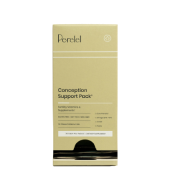
At Perelel , we’re here to make that whole-body support simpler. Every product we make (from our Daily Probiotic to our Conception Support Pack ) is formulated by leading OB/GYNs, fertility specialists, and nutrition experts to meet your body where it is and help you feel your best through every stage of your hormonal journey.
Whether you’re just starting to think about trying or already planning your next step, we’ll help you build a supplement routine that actually fits your body, your goals, and your life. Take our quiz to find your personalized Perelel routine and discover what your body needs to feel supported today and through every stage ahead.
Sources:
Lactobacillus crispatus-dominated vaginal microbiome | PubMed
Effect of L. crispatus M247 Administration on Pregnancy Outcomes | PMC
Lacticaseibacillus rhamnosus GR-1 | ScienceDirect